How to Stop Overthinking and Start Making Better Decisions
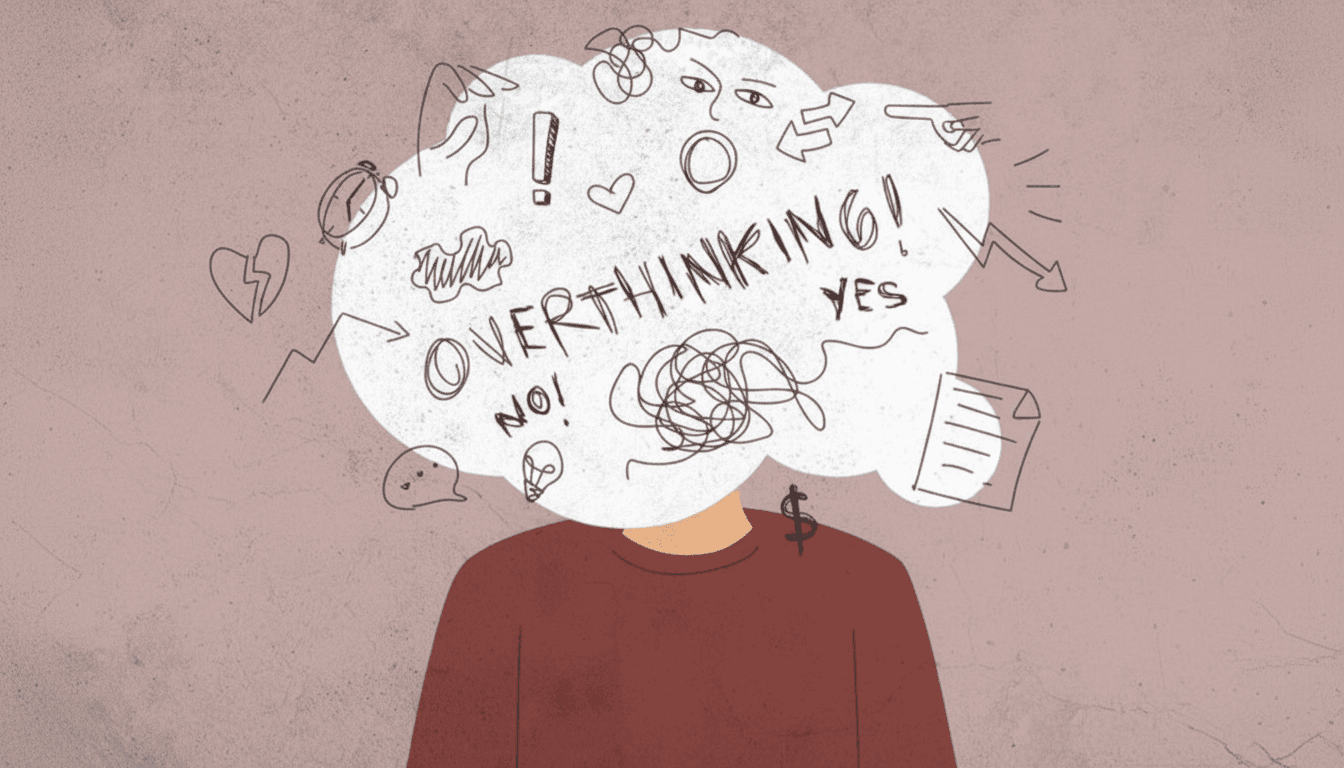
Overthinking is one of the most common mental habits that quietly sabotages progress. You replay conversations in your head, weigh every possible outcome, and second-guess choices until decisions that should take minutes stretch into hours or days. The result is often paralysis, stress, and poorer outcomes than if you had acted with reasonable confidence. Learning to manage overthinking is not about becoming reckless, it is about creating space for clearer, faster, and more effective decision-making.
Understanding Overthinking
Overthinking, also known as rumination when focused on the past or worry when directed at the future, involves repetitive negative thinking. It differs from productive reflection. Healthy analysis examines facts, considers options, and leads to action. Overthinking loops without resolution and often amplifies anxiety.
Research in psychology shows that overthinkers activate the brain’s default mode network more intensely, which is linked to mind-wandering and self-referential thinking. This can feel productive, but it frequently drains mental energy and clouds judgment.
Common triggers include:
- Fear of making the wrong choice
- Perfectionism
- Past trauma or repeated failures
- High-stakes situations (career moves, relationships, major purchases)
- Uncertainty in ambiguous environments
People who score high on measures of introspection or neuroticism in personality assessments tend to overthink more. If you frequently ask “What if?” or replay scenarios, you are not alone. Millions experience this pattern daily.
The Cost of Overthinking on Decision Quality
Overthinking harms decision-making in several measurable ways. First, it leads to decision fatigue. The more mental cycles you spend on one issue, the less cognitive resources remain for others. Studies on ego depletion demonstrate that prolonged deliberation reduces self-control and increases impulsivity later.
Second, it amplifies loss aversion. You focus disproportionately on potential downsides, making even balanced risks feel dangerous. This explains why many talented individuals stay in unfulfilling jobs or avoid promising opportunities.
Third, overanalysis can distort probability. You assign unrealistic weight to low-probability catastrophes while discounting evidence that supports positive outcomes. This cognitive bias, known as catastrophizing, directly impairs judgment.
Finally, chronic overthinking correlates with higher rates of anxiety disorders and depression. The constant mental noise makes it harder to access intuition, which often synthesizes experience faster than conscious reasoning.
Practical Strategies to Interrupt Overthinking
Breaking the cycle requires both immediate tactics and longer-term habits. Here are evidence-based approaches:
1. Set Time Limits for Decisions
Give yourself a defined window to analyze. For small decisions (what to eat, which email to send first), use the 5-minute rule. For medium decisions (weekend plans, minor purchases), allocate 30-60 minutes. For major decisions (job change, relocation), schedule dedicated research blocks across a few days rather than endless rumination.
Parkinson’s Law states that work expands to fill the time available. By constraining time, you force prioritization and prevent spiraling.
2. Use the “Good Enough” Framework
Perfectionism fuels overthinking. Adopt the satisficing approach coined by Herbert Simon: aim for decisions that are good enough rather than optimal. In most real-life scenarios, the difference between the best choice and a very good choice is marginal compared to the cost of delay.
Ask: “Will this decision matter in one year? In five years?” Many daily worries fail this test.
3. Practice Thought Labeling and Defusion
When you catch yourself looping, label the process: “This is overthinking” or “This is anxiety talking.” Cognitive behavioral techniques show that naming the pattern creates psychological distance. You stop identifying with every thought and see it as mental weather passing by.
Mindfulness apps and simple breathing exercises (box breathing: 4 seconds in, 4 hold, 4 out, 4 hold) reduce activity in the amygdala, the brain’s fear center.
4. Create a Decision Matrix for Complex Choices
For important decisions, structure your thinking instead of letting it run wild. List criteria that matter (cost, time, alignment with values, risk level). Assign weights and score options objectively. This externalizes the process, reducing internal mental chatter.
Many successful executives and investors rely on similar frameworks to cut through noise.
5. Limit Information Intake
More data does not always equal better decisions. The paradox of choice shows that excessive options increase regret and dissatisfaction. Set boundaries: research for 45 minutes, then decide. Avoid endless forum scrolling or asking everyone’s opinion.
6. Schedule Worry Time
Designate 15-20 minutes daily as “worry time.” Write down concerns and possible actions. Outside that window, postpone rumination. This technique, supported by clinical studies, trains the brain to contain anxiety rather than let it leak throughout the day.
7. Move Your Body
Physical activity is one of the fastest ways to break rumination. A brisk walk, workout, or even cleaning shifts blood flow and releases endorphins. Many people report that solutions appear after they stop forcing mental effort and engage physically.
8. Strengthen Core Decision Values
Clarity about personal values acts as an internal compass. When you know your top priorities (autonomy, security, growth, relationships), decisions become simpler because misaligned options are easier to eliminate. Regular reflection through journaling helps solidify these values.
Developing Better Decision-Making Habits
Stopping overthinking is only half the battle. You also need systems for making stronger choices consistently.
Embrace Probabilistic Thinking
Few decisions are certain. Train yourself to think in probabilities: “There is roughly a 70% chance this works out well based on available information.” This mindset reduces binary success/failure pressure.
Learn from Past Decisions Without Dwelling
Review outcomes constructively. What information did you have? What assumptions proved wrong? Keep a brief decision journal noting key choices and results. Over months, you will spot patterns and improve calibration.
Distinguish Reversible from Irreversible Decisions
Jeff Bezos popularized the idea of Type 1 (irreversible) and Type 2 (reversible) decisions. Most choices are reversible. You can change jobs, end a lease, or pivot projects. Recognizing this lowers the perceived stakes and quiets anxiety.
Build Tolerance for Uncertainty
Uncertainty is unavoidable. Exposure practices help: deliberately make small decisions with incomplete information. Each successful micro-decision builds confidence for larger ones.
Leverage External Accountability
Share goals with trusted friends or mentors, not for endless advice but for gentle accountability. Sometimes voicing a decision out loud reveals its flaws or strengths immediately.
Incorporate Rest and Recovery
Sleep, nutrition, and downtime dramatically affect decision quality. A tired brain defaults to overthinking or poor shortcuts. Protect your cognitive resources as carefully as you protect time.
Real-World Examples of Transformation
Consider Sarah, a marketing manager who analyzed every campaign idea for weeks. She implemented decision time limits and a simple scoring system. Within months, her team executed more projects with better results and she reported significantly lower stress.
Or Michael, who agonized over whether to propose to his partner. After clarifying his values and limiting research to key conversations, he acted. The clarity came not from more thinking but from structured reflection.
These stories are common among people who move from analysis paralysis to decisive action.
Long-Term Mindset Shifts
Ultimately, stopping overthinking requires self-compassion. Everyone makes imperfect decisions. The goal is progress, not flawlessness. View mistakes as data rather than indictments of your worth.
Regular practices like meditation, exercise, and journaling compound over time. Many report that after 3-6 months of consistent effort, the frequency and intensity of rumination decrease noticeably.
You do not need to eliminate all analysis. Healthy thinking serves you. The skill lies in knowing when enough is enough and trusting yourself to move forward.
Action creates clarity more often than clarity creates action. By reducing overthinking, you free mental energy for creativity, relationships, and meaningful goals. Each small decision you make with confidence builds momentum. Over time, this compounds into a life marked by greater agency and satisfaction.
Start today with one technique. Choose a minor pending decision, set a time limit, and act. Notice how it feels. Build from there. Better decisions await on the other side of overthinking.