The Science of Habit Formation: How to Change Your Life in 2026
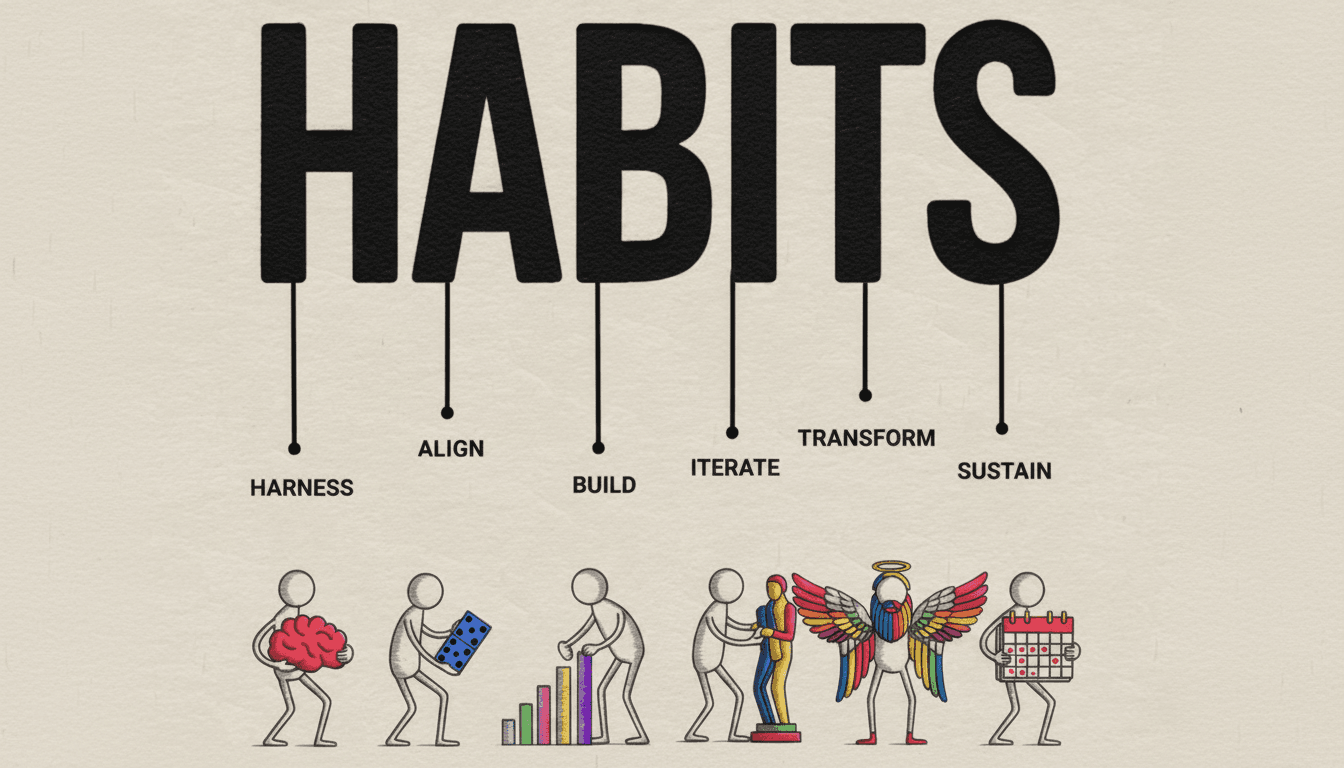
In a world overflowing with distractions, notifications, and endless demands on our attention, the ability to build positive habits and break negative ones remains one of the most powerful predictors of long-term success, happiness, and well-being. As we navigate 2026, with its advanced productivity tools, AI coaches, and greater awareness of mental health, understanding the science of habit formation has never been more relevant. Whether you want to exercise consistently, improve your sleep, advance your career, or build stronger relationships, the principles remain the same, grounded in neuroscience, psychology, and behavioral data.
This comprehensive guide explores how habits actually work, evidence-based strategies to rewire your behavior, and practical ways to apply them in 2026. It also shows how modern self-assessment tools and compatibility matching can accelerate your progress by providing real-world benchmarks and accountability.
The Neuroscience of Habits: Why They Are So Powerful
Habits are not just routines; they are neurological shortcuts.
When you repeat a behavior in a consistent context, your brain forms strong neural pathways. This process involves dopamine, the neurotransmitter associated with reward and motivation. Every time you complete a habit, whether checking your phone or going for a run, your brain releases dopamine, reinforcing the loop.
Charles Duhigg popularized the Habit Loop in The Power of Habit:
- Cue: A trigger that tells your brain to go into automatic mode.
- Craving: The motivational force behind the habit (the anticipation of reward).
- Response: The actual behavior.
- Reward: The satisfaction that reinforces the loop.
James Clear's Atomic Habits refined this further, emphasizing that small 1% improvements compound dramatically over time. In 2026, with wearable tech and AI trackers, we can monitor these loops with unprecedented precision.
Studies show that 40-45% of daily actions are habits, not conscious decisions (Wood & Rünger, 2016). This explains why willpower alone often fails, you are fighting against deeply wired neural pathways.
How Long Does It Really Take to Form a Habit?
The often-cited “21 days” myth comes from a 1960s plastic surgery study and is misleading. A 2009 study by Phillippa Lally at University College London found that it takes an average of 66 days for a new behavior to become automatic, with a range of 18 to 254 days depending on complexity and individual differences.
Simple habits like drinking water with breakfast form faster. Complex ones like daily meditation or consistent gym attendance take longer. In 2026, data from millions of users on habit-tracking platforms shows that people who use social accountability and progress visualization reach automaticity about 30-40% faster.
The Science-Backed Framework for Building Habits in 2026
1. Start with Identity-Based Habits
James Clear's most powerful insight: Focus on who you wish to become rather than what you want to achieve.
- Bad: “I want to run a marathon.”
- Better: “I am a runner.”
This identity shift changes your self-image and makes consistent action feel natural. Modern personality and habit assessments help you clarify this identity by comparing your current patterns against global averages.
2. Make It Obvious (Environment Design)
Your environment is the invisible hand shaping your behavior. In 2026, with smart homes and AI, you can optimize this like never before:
- Place running shoes by your bed.
- Use app blockers during deep work hours.
- Set phone wallpapers with your goals.
Research from behavioral economics shows that context cues are more powerful than motivation. One study found that people who ate from smaller plates consumed 20-30% fewer calories without realizing it.
3. Make It Attractive (Dopamine Hacking)
Pair a habit you need to do with one you want to do (temptation bundling). Listen to your favorite podcast only while exercising. In 2026, AI habit apps use personalized reward prediction to keep motivation high.
4. Make It Easy (The Two-Minute Rule)
Scale down new habits until they take less than two minutes. “Meditate for 10 minutes” becomes “Sit on the meditation cushion.” This lowers activation energy and builds momentum.
5. Make It Satisfying (Immediate Rewards)
Track streaks visually. Use “don't break the chain” calendars or apps. Immediate feedback loops are crucial, this is where modern platforms excel by showing you percentile rankings against global users.
Breaking Bad Habits: The Inversion of the Laws
To break bad habits, invert the four laws:
- Make it invisible (remove cues).
- Make it unattractive (reframe the craving negatively).
- Make it difficult (add friction).
- Make it unsatisfying (accountability partners or public commitment).
For example, to reduce doom-scrolling in 2026, use grayscale mode on your phone, keep it in another room during meals, and replace the habit with a satisfying alternative like reading or calling a friend.
Neuroplasticity research shows the brain can weaken old pathways while strengthening new ones, but it requires consistent repetition and replacement, not just suppression.
Habit Stacking and Implementation Intentions
Two of the most effective techniques:
- Habit Stacking: “After [current habit], I will [new habit].” Example: After pouring my morning coffee, I will journal for two minutes.
- Implementation Intentions: “If X happens, I will do Y.” These “if-then” plans increase success rates by up to 300% according to studies by Peter Gollwitzer.
The Role of Data and Self-Awareness in 2026
This is where modern platforms transform habit change from guesswork into a science. By taking targeted surveys on daily routines, productivity, health behaviors, and social patterns, users receive accurate percentile rankings against worldwide data. Seeing that you are in the top 30% for consistency but bottom 40% for physical activity provides powerful motivation and clarity.
Premium assessments offer deeper insights into specific domains, sleep quality, emotional regulation, financial habits, or learning styles. Even more powerful are compatibility matching tests for friendship and professional relationships. These tools analyze responses and deliver detailed compatibility percentages plus actionable insights: “You both value early rising but differ significantly in risk tolerance, here's how to navigate that.”
Having an accountability partner whose habits align with yours can dramatically improve outcomes. Studies on habit formation consistently show social support as one of the strongest predictors of long-term success.
Real-World Applications for Different Life Areas
Health & Fitness: Data shows that people who track habits publicly are 65% more likely to stick with exercise programs. In 2026, integrate wearables with survey insights for personalized plans.
Productivity: Knowledge workers who implement deep work habits report 2-3x output. Use environment design and habit stacking around your most important tasks.
Relationships: Building habits like daily gratitude expressions or active listening dramatically improves connection quality. Matching tools can help you find friends or colleagues who complement your style.
Learning & Growth: The “Ultralearning” approach combined with spaced repetition and habit tracking yields exceptional results in skill acquisition.
Financial Habits: Automating savings, reviewing expenses weekly, and using “pay yourself first” principles create wealth almost effortlessly over time.
Overcoming Plateaus and Setbacks
Expect setbacks. The key is a growth mindset (Carol Dweck) combined with self-compassion. Analyze lapses as data points rather than failures. Most people quit when they miss a few days, resilient habit-formers simply restart without self-judgment.
In 2026, AI coaches can detect patterns in your data and suggest micro-adjustments before you fall off track entirely.
Your 2026 Habit Transformation Plan
- Week 1: Complete comprehensive habit and personality surveys to establish baselines and global percentiles.
- Week 2-4: Choose 1-3 keystone habits using the four laws. Make them tiny.
- Month 2: Introduce habit stacking and implementation intentions. Find an accountability match.
- Month 3+: Scale up gradually. Review progress with follow-up assessments.
Track not just completion but also your energy, mood, and life satisfaction. True habit success shows in holistic improvements.
Conclusion: The Compound Effect in the Age of Awareness
The science of habit formation reveals a profound truth: Your future self is built by the habits you practice today. Small, consistent actions create remarkable results through compounding.
In 2026, you have more knowledge, better tools, and greater access to personalized data than any previous generation. Platforms that combine scientific assessments, global benchmarking, and intelligent compatibility matching remove the isolation and guesswork that derailed past efforts.
The question is no longer whether you can change, the science is clear that you can. The question is whether you will start today, using every available tool to design the life you truly want.
Your habits shape your identity. Your identity shapes your destiny.
Start small. Stay consistent. Let the science and the data work for you.
FAQ - Frequently Asked Questions
1. How long does it actually take to form a new habit?
On average, it takes 66 days for a new behavior to become automatic, though this varies from 18 to 254 days. Simple habits form faster; complex ones take longer. Using data-driven tracking, global percentile feedback, and accountability matching can speed up the process by 30-40%.
2. Is willpower enough to change my habits?
Willpower is limited and unreliable. The most successful people design their environment, use habit stacking, and leverage social accountability rather than relying solely on motivation. Modern platforms that show your real-time position against world averages make maintaining discipline significantly easier.
3. What are the most effective strategies to break bad habits?
Invert the four laws of habit formation: make the bad habit invisible (remove cues), unattractive (reframe negatively), difficult (add friction), and unsatisfying (use accountability). Replacing the old habit with a better one is more effective than simple suppression.
4. How can online assessments and percentile rankings actually help me?
Seeing concrete data, for example, that you are in the top 25% for morning routine consistency but bottom 35% for physical activity, provides clarity and motivation that generic advice cannot. Our surveys use real aggregated global data so you understand exactly where you stand compared to millions of others worldwide.
5. What is habit compatibility matching and why does it matter?
Our match tests analyze your responses and compare them with friends, partners, or colleagues. You receive a compatibility percentage plus specific insights: where your habits align perfectly and where differences exist (e.g., one person is an early riser, the other a night owl). This helps prevent friction and creates stronger mutual support systems.
6. Can genetics affect my ability to build habits?
Genetics influence traits like conscientiousness and dopamine sensitivity, but they are not destiny. Environment, systems, and consistent practice have a much larger impact. Many people in the top percentiles for habit consistency come from all genetic backgrounds, the science shows systems beat genetics over time.
7. Which habits give the biggest return in 2026?
Keystone habits such as consistent sleep, daily movement, focused deep work blocks, and regular reflection tend to create positive spillover effects in multiple life areas. Our platform highlights your highest-leverage opportunities based on your survey responses.
8. How do I stay motivated when progress feels slow?
Motivation follows action, not the other way around. Focus on identity (“I am a healthy person”), use visual progress tracking, celebrate small wins, and regularly review your global percentile improvements. Matching with compatible accountability partners dramatically increases long-term adherence.
9. Are habit tracking apps enough by themselves?
Apps are helpful but most people get better results when combining them with deep self-assessment, global benchmarking, and human accountability. Our platform integrates all three for more sustainable change.